Reflective sheeting grades explained: engineering, high-intensity and honeycomb crystal
Glass-bead versus microprismatic reflective film, what the grades mean, and which to specify for road signs, vehicles and night-visible advertising.
Short answerEngineering grade (glass bead) suits low-speed roads and temporary signs; high-intensity and microprismatic honeycomb crystal grades return several times more light for highways and critical signs; printable glass-bead films are used for full-colour night-visible graphics on vehicles and advertising.
Reflective films do not glow; they return headlight beams to the driver. How efficiently they do that depends on the optics inside.
Glass beads vs microprisms
Glass-bead films embed tiny spheres that bend light back toward the source. They are economical and flexible, which makes them printable and easy to apply to vehicles.
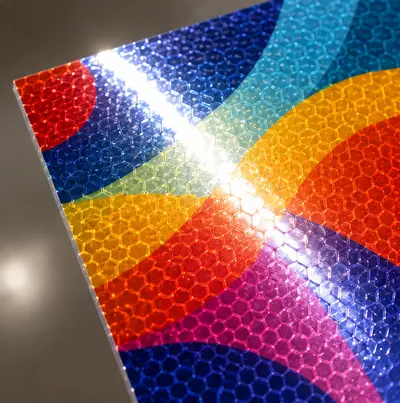
Microprismatic films use cube-corner prisms that return far more light, especially at the wide angles drivers see signs from. The honeycomb pattern you see is the sealing grid that keeps moisture out of the prisms.
Common grades
| Grade | Optics | Typical use | Life |
|---|---|---|---|
| Engineering | Enclosed glass bead | Low-speed roads, temporary signs | 5–7 years |
| High-intensity | Encapsulated bead or prism | Urban roads, regulatory signs | 7–10 years |
| Honeycomb crystal | Microprismatic | Highways, critical warning signs | 7–10 years |
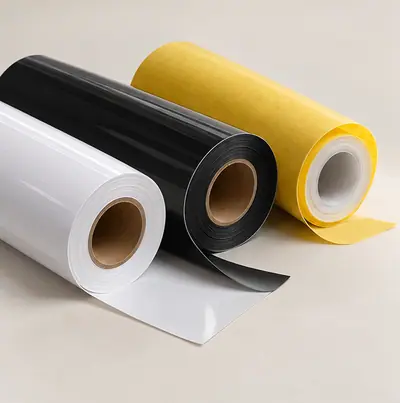
| Printable | Glass bead, ink-receptive | Fleet graphics, night advertising | 3–5 years |
How to specify
- Check the road authority’s standard for the class it requires.
- Match laminates and inks to the film; non-matched laminates cut reflectivity.
- For vehicles, choose conformable glass-bead film over rigid prismatic grades.
See our honeycomb crystal-grade sheeting and printable reflective vinyl.
Frequently asked questions
What is retroreflection?
Light returned back towards its source — the driver’s headlights — rather than scattered. That is why reflective signs appear bright to drivers but not to bystanders.
How long does reflective sheeting last?
Engineering grade around 5–7 years, microprismatic grades 7–10 years, depending on climate.
Tags: Reflective Buying guide